Louise Laboine’s social alienation
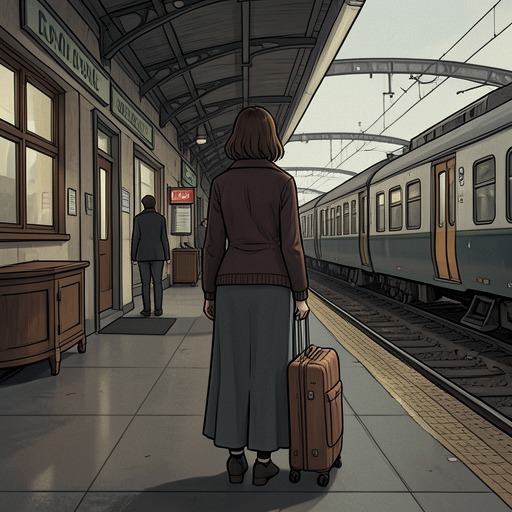
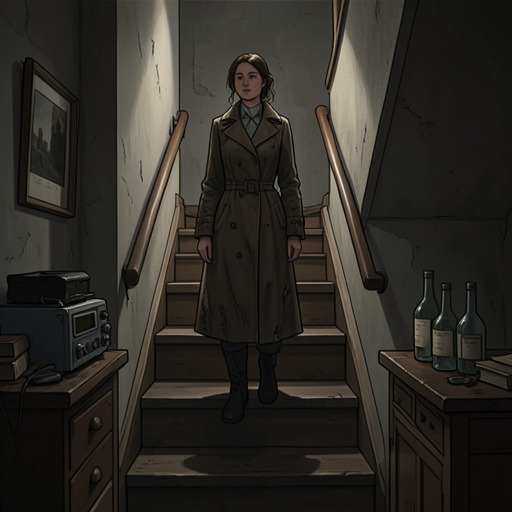
Maigret and the Dead GirlLouise Laboine’s social alienation appears not as a single declaration of loneliness but as a pattern of exposure and neglect. She works outdoors in the cold, becomes ill, and spends a week in bed without anyone to look after her. The rooms and crowds through which she passes offer no reliable shelter or belonging. Maigret’s later recollection gathers these scattered scenes into the story of a woman who was repeatedly present among other people yet remained precariously alone.
Work, illness, and neglect
Louise had been working in a shop on Boulevard Magenta, at an outside stall selling cut-price goods. She spent part of the winter there, exposed to the cold wind, caught a chest cold, and had to remain in bed for a week. The circumstances link her illness to the conditions of her work: the stall placed her outdoors, and her illness interrupted the routine that had brought her there. The narrative supplies no account of medical help or recovery beyond the fact that she was confined to bed.
When Maigret asks who cared for her, the answer is nobody. Louise’s room was a garret on the top floor, described as the lowest kind of lodging; most of its clients were Algerians. The detail establishes the poor and marginal character of her surroundings without making those other residents responsible for her isolation. What matters in the account is the absence of care: during an illness serious enough to keep her in bed for a week, no one attended to her. Her social vulnerability is therefore expressed through a material circumstance rather than through an abstract description of her feelings.
A life reconstructed through rooms
The narrative presents Louise’s past as a sequence Maigret pieces together from other people and remembered places. By this point, the gaps in her story are nearly filled, from her departure from her mother in Nice to the evening she finds Jeanine Armenieu at the Roméo. The reconstruction gives shape to events that might otherwise remain disconnected: lodging, work, illness, and attempts to reach someone she knows. Its order is not simply a catalogue of addresses. Each place indicates a different condition of her life, while the recurring question is whether anyone there offers her lasting support.
Maigret’s recollection moves among sharply contrasting interiors. He sees Louise hiding under a bed at Mademoiselle Poré’s, then later quarrelling with Jeanine Armenieu in their rooms on Rue de Ponthieu. He also imagines her in a squalid hotel on Rue d’Aboukir and outside the shop on Boulevard Magenta, working in the cold wind. These scenes do not all show the same kind of isolation: hiding, conflict, poor lodging, and exposed labor are distinct experiences. Set together, however, they make her movement through the city feel less like secure settlement than a succession of precarious places.
Crowds, contact, and belonging
Louise is not depicted as living wholly apart from society. Maigret sees her going into Maxim’s and, a month later, making her way through the crowd of wedding guests at the Roméo. These appearances matter because they complicate any simple equation between isolation and physical solitude. She enters public and social spaces, but presence among other people does not by itself establish that she has a dependable place within their lives. At the wedding, she moves through a crowd; the remembered image preserves both her participation in the occasion and her passage through it as one person among many.
Her quarrel with Jeanine Armenieu also gives the account a more intimate dimension. The two women share rooms on Rue de Ponthieu, but the remembered scene is one of conflict, not uncomplicated companionship. The evidence does not erase the relationship or explain every cause of the quarrel; it shows that proximity could coexist with discord. Against the earlier image of Louise hiding under a bed at Mademoiselle Poré’s, the quarrel marks a different form of insecurity: not simply having nowhere to go, but finding that a close domestic arrangement can also become a site of strain.
Maigret’s act of attention
Maigret says that he came to know Louise quite well. As he speaks, he can picture her in these varied circumstances, and he could repeat what people had said about her, from the concierge to Madame Crêmieux. His account gathers the testimony and impressions surrounding her, but it also gives their fragments a continuity that their original observers may not have seen. The contrast is significant: Louise receives little practical care when ill, while later Maigret devotes attention to reconstructing the conditions of her life.
That attention does not reverse the neglect or turn her hardships into evidence of a hidden community around her. Instead, the narrative makes alienation legible through concrete contrasts: an outdoor stall and a sickbed, a garret and a crowded wedding, a shared room and a quarrel. Maigret’s reconstruction connects those scenes without claiming that they amount to a full account of Louise’s inner life. Her isolation remains visible in the circumstances the narrative can establish, especially the stark fact that when she was ill and confined to bed, nobody looked after her.